
Physical AI: Why Embodied Robotics Is the Next Global Shift
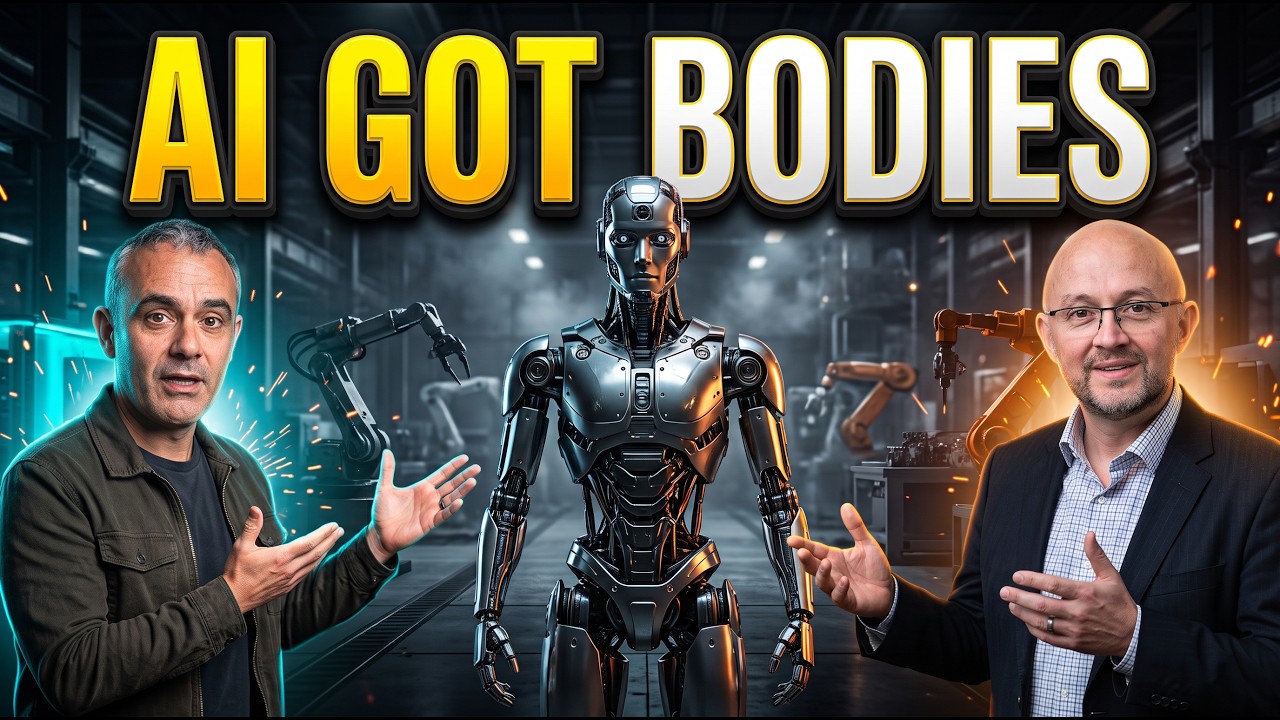
Software will not take your career. A physical machine equipped with spatial vision, artificial intelligence, and industrial hands will take it instead.
THIS IS A MAJOR PROBLEM WE ARE ALL FACING
You spent the past three years watching text stream across a digital browser. You assumed the artificial intelligence revolution would remain confined to chat windows and automated spreadsheets.
That assumption is dead. In the first quarter of 2026, venture capital deployed sixteen billion dollars into physical AI and humanoid manufacturing across five hundred deals. Global industry is no longer asking whether embodied robotics can function in theory. Former Sony robotics leader and EU Digital Ambassador Nicolas Babin confirms that physical AI is having its true ChatGPT moment. Hyundai already deploys humanoid hardware in active production environments, while Audi and BMW pilot them on assembly lines. The operational question is no longer about proof of concept. The question is whether you can compete with hardware that learns by demonstration and never sleeps.
CHANGE THE WAY YOU LOOK AT THIS
Stop viewing robotics through the nostalgic lens of mechanical automation. Traditional automation executes rigid, pre-programmed scripts inside safety cages. Physical AI anticipates real-world variables, learns through observation, and self-corrects without manual software updates. For thirty years, engineers built an artificial brain inside the cloud.
Today, developers are bolting that brain onto physical eyes, functional hands, and bipedal legs. In our recent conversation on Influential Visions, Nicolas Babin and I examined why physical AI represents the true turning point of the machine age. When software fails, a spreadsheet breaks. When an embodied machine fails on a factory floor or a battlefield, steel crushes bone. That single physical reality rewires the economics of labour, sovereign defence, and corporate liability.
The Industrial Sprint: Lessons from Beijing
The pace of mechanical experimentation is accelerating far beyond Western boardrooms. At the World Humanoid Robot Games in Beijing, 2,056 robots from 666 teams representing 16 countries competed across demanding physical environments. In the hundred-metre sprint, a humanoid machine eclipsed the world record held by human athletes.
Do not dismiss this as a sporting exhibition. As Nicolas Babin pointed out, China is using sports as an open-air industrial laboratory. The goal is simple: generate real-world operational data, accelerate machine learning cycles, and prepare factories for mass commercial deployment. Autonomous movement is no longer an engineering barrier. The machines can already navigate physical space without human teleoperation.
The Hardware Cost Curve
Thirty years ago, Nicolas Babin worked on Sony’s early humanoid robot, Curio. That machine was a mechanical triumph, yet commercialisation was impossible because manufacturing costs equalled those of an exotic luxury supercar—roughly half a million euros. Sony launched the Aibo robotic dog instead, proving that commercial production reduces price points from two thousand euros to nine hundred euros over six years.
We are entering that exact deflationary curve with modern humanoids. High prototype costs collapse once industrial supply chains achieve scale. Within five years, standard units will cost the equivalent of a modest vehicle or a corporate workstation. When procuring a bipedal robot costs less than an entry-level annual salary, every executive will face an undeniable financial decision.
Autonomous Defence and Physical Liability
The dangerous reality of this technology is already operating in sovereign conflicts. Armies deploy robotic dogs to clear minefields, neutralise booby traps, and operate targeted laser systems. When autonomous hardware possesses the kinetic ability to damage infrastructure or end human life, ethical debates cease to be academic exercises.
Europe is taking the global lead on this frontier. The European Commission is currently drafting strict governance frameworks to address operational liability when machines make physical choices. If an autonomous system injures a worker or damages property, legal responsibility must rest with human operators and corporate directors. Innovation without legal architecture invites catastrophe. Hard-coded human oversight must remain mandatory.
Confronting the Fear: Zeros, Ones, and Human Oversight
Public fear regarding artificial intelligence is legitimate. You see continuous reports of software hallucinations, algorithmic manipulation, and severe psychological distress caused by unmonitored systems.
Nicolas Babin cuts through this hysteria with engineering logic: algorithms are fundamentally zeros and ones. They are software routines, not autonomous life forms. When models produce unintended outcomes in research trials, human teams identify the anomaly, audit the system, and erect operational guardrails. Panic produces paralysis. The only viable path forward is active education, regulatory enforcement, and keeping human purpose firmly at the centre of every technological deployment.
The 2031 Horizon: Human-Machine Complementarity
By 2031, physical AI will achieve complete operational complementarity with human workers. We will not see the total elimination of the workforce; we will witness the systematic transfer of dangerous, repetitive, and physically destructive tasks to machines. Autonomous commercial vehicles and firefighting robots entering lethal structural blazes are already proving this transition.
This transformation demands deliberate personal change management. If you refuse to upskill, you surrender your professional leverage. If you learn to direct, audit, and orchestrate physical intelligence, you become irreplaceable.
If this was useful, Future Proofed Leader lands in your inbox weekly. Subscribe free: substack.com/@futureproofleader
Stop treating physical AI as a headline for the next decade. Audit your operational skills, identify your irreplaceable human edge, and master the tools before the machines arrive on your floor.
100% Ad-Free Strategic Intelligence
Join MONDAY INFLUENCER® for direct access to weekly actionable briefings, prompt engineering frameworks, and private advisory sessions.